The Best Lash Tweezers - A Guide for all Lash Techs!


Table of Contents
The Best Lash Tweezers: A Guide for Lash Technicians
The best lash tweezers are the ones that suit your technique, give you reliable control and feel comfortable throughout an appointment. A pair that works beautifully for another lash artist may not suit your grip or preferred fanning method.
Whether you are building your first lash kit or updating your tools, start by considering the task: isolating natural lashes, picking up classic extensions or creating volume fans. This guide explains the main tweezer shapes and how to choose between them.
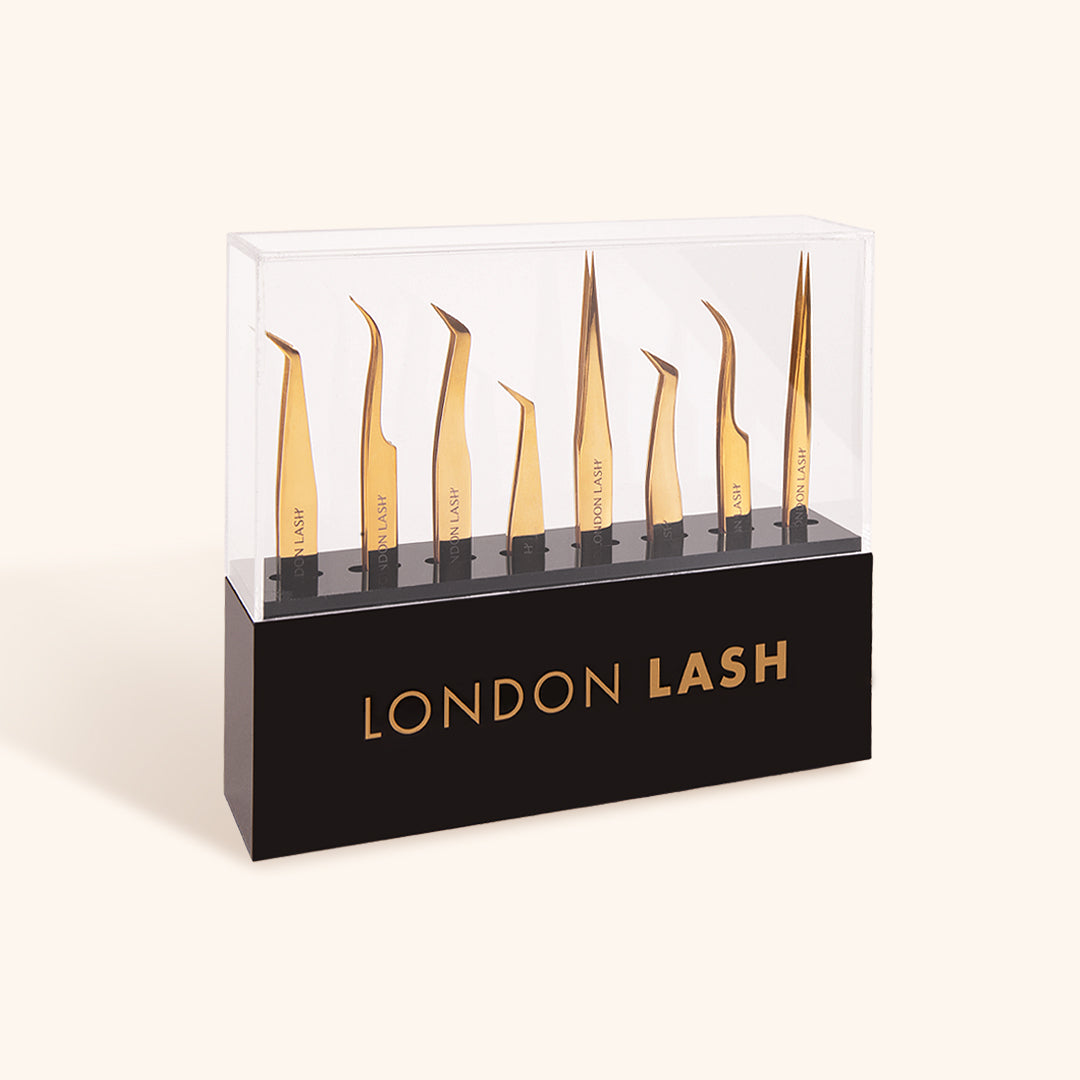
Explore our professional eyelash tweezers to compare the available styles.

Which Lash Tweezers Do You Need?
Most lash technicians work with two pairs: one to isolate a natural lash and another to pick up and place the extension. Volume artists also need application tweezers that can hold their chosen fans securely.
| Task | Tweezer Options | What to Look For |
|---|---|---|
| Isolating natural lashes | Straight, pointed, angled or curved isolation tweezers | Fine tips, a clear view of the lash line and a comfortable working angle |
| Picking up classic extensions | Classic picking tweezers or a suitable multifunctional pair | Accurate closure and a secure grip on individual extensions |
| Creating handmade volume fans | Volume tweezers with a regular boot, fine tip or suitable fibre-tip design | Reliable grip across the working area used for your fanning technique |
| Picking up premade fans | Application tweezers suited to the fan size and base | Controlled pickup without twisting or damaging the fan |
| Checking and separating stickies | Fine isolation tweezers | Precise access and control when following your trained separation technique |
The Best Lash Tweezers for Isolation
Isolation tweezers hold neighbouring natural lashes apart so you can attach an extension to one natural lash. Your choice of shape should help you see the lash clearly and work without unnecessarily bending your wrist.
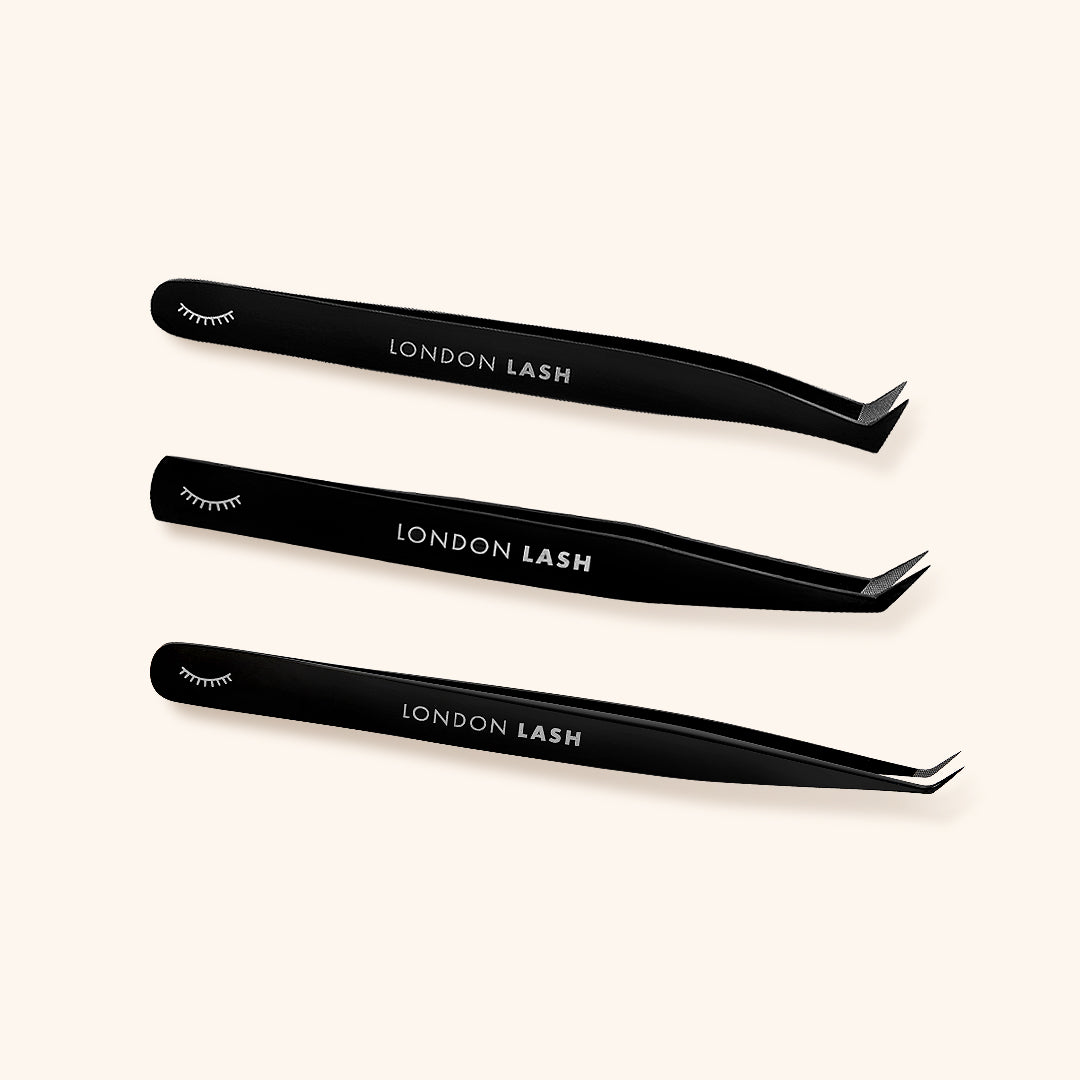
Browse our isolation tweezers to compare the different options.
Straight Isolation Tweezers
Straight tweezers have a familiar, narrow profile and are a common starting point for lash technicians. Their fine tips allow precise isolation and can also help with checking and separating stickies.
If straight tweezers feel natural in your hand and give you a clear view of the lash line, there is no need to change simply because another shape is popular.
Pointed Isolation Tweezers
Pointed designs offer precise access around individual natural lashes. Depending on the model, the tip and body shape provide a slightly different working angle from a straight pair.
Choose them for the control they give you, while maintaining a safe working distance from the skin and eye area.
Angled Isolation Tweezers
Angled tweezers change the position of the tips relative to your hand. This can help you reach the lashes while keeping your wrist in a more comfortable position.
They are worth trying if a straight pair makes you adjust your wrist repeatedly to achieve a clear view.
Curved Isolation Tweezers
Curved tweezers are another option for accessing the lash line from a comfortable angle. Many technicians prefer them because the curved tips suit their hand position and working setup.
Comfort is individual, so assess them alongside your client position, chair height and lighting rather than expecting the shape alone to resolve strain.
The Best Tweezers for Classic Lash Extensions
Classic application requires a secure grip on one extension at a time. Some isolation shapes can also pick up classic lashes, although you still need a separate pair to isolate while placing the extension.
The most useful application pair closes accurately, holds the extension without slipping and lets you approach the natural lash at the correct angle.
Browse our classic picking tweezers for tools suited to individual lash pickup.
Are Multifunctional Tweezers Useful?
Multifunctional tweezers can be a useful addition to your kit for classic application and selected volume techniques.
Their suitability depends on the specific pair, your technique and the lashes you use. Test their grip with your usual lash diameter and fan size before relying on them for a treatment.
The Best Tweezers for Russian Volume Lashes
Volume tweezers need to hold several fine extensions together without allowing fibres to slip. Their tip shape and contact area are therefore particularly important when creating and lifting fans.
Choose a pair that works with your fanning method, whether you create fans on the strip, use a pinching technique or work with another trained method.
Explore our volume and mega volume fanning tweezers to compare the available designs.
Regular Boot Volume Tweezers
A broader boot provides a larger working area for gripping and controlling a fan. This shape can suit technicians who prefer substantial contact with the fibres during fan creation and pickup.
Check that the pair holds your chosen lashes securely using your normal hand pressure. A wider tip is only helpful if it suits the way you work.
Fine Tip Volume Tweezers
Fine tip volume tweezers have a slimmer working profile, which can be useful when creating fans with shorter extensions or working in a smaller area.
The finer shape gives you a different view and contact area from a regular boot. Try both styles with your preferred fanning technique to find which gives you the most consistent pickup.

Fibre-Tip Tweezers
Fibre-tip eyelash tweezers offer a textured gripping surface and are available in different shapes.
Choose the shape for the task first, then assess how the gripping surface performs with your lashes. Fibre tips do not make every tweezer suitable for every technique, and they still need careful cleaning and handling.
Can You Make Volume Fans with Curved Isolation Tweezers?
Some technicians can create fans with curved or multifunctional tweezers, but an isolation pair is not automatically suitable for volume work.
If fibres slip, the fan closes during pickup or you need excessive pressure to maintain your grip, try a pair designed for volume application. The important test is whether you can create and transfer the fan consistently without losing lashes.
How to Choose the Right Lash Tweezers for You
Match the Tool to Your Technique
Start with the services you offer and the lashes you use. A classic application pair has different demands from a tool used to make fans from very fine volume lashes.
When comparing tweezers, use the same lash diameter, length and pickup method you normally work with. This gives you a more useful assessment than testing on unfamiliar lashes.
Check Grip and Tip Alignment
The tips should meet accurately and hold the lash or fan securely at your normal working pressure. Look for gaps, slipping fibres or an uneven grip.
Volume tweezers may have a particular working area where pickup is most reliable. Practise locating that area before using a new pair during a client appointment.
Assess Comfort and Closing Pressure
Consider the weight, balance and pressure needed to close the tweezers. A pair that requires constant force may feel tiring during a long appointment.
Your preferred shape should allow controlled movements and a comfortable wrist position. Check your workstation setup too, as tweezer choice is only one part of working comfortably.
Practise Before Switching During Treatments
Give yourself time to become familiar with a new pair. Small differences in tip angle and grip can affect pickup even when the tweezers are well suited to the task.
Keep a suitable backup pair ready so a dropped or damaged tool does not interrupt your appointment.
Are London Lash Tweezers Hand Tested?
London Lash’s tweezer guides describe fan-making tweezers as hand tested for their intended function, while other designs receive checks appropriate to their purpose.
Check the current product description for the testing information relevant to the pair you are buying. Testing supports quality control, but your technique and preferred grip still determine which design works best for you.
How to Clean and Care for Lash Tweezers
Adhesive residue can interfere with accurate closure and reliable pickup. Removing it promptly helps maintain the performance of your tools.
Glue Remover for Tweezers is designed to remove adhesive residue. Follow its instructions and check compatibility with your tweezer material and finish.
- Avoid scraping the tips with another metal tool, as this can damage or misalign them.
- Remove cleaning-product residue as directed before returning the tool to use.
- Complete the appropriate cleaning and disinfection process between clients; glue removal alone does not replace disinfection.
- Dry and store the tweezers according to the relevant care instructions.
- Protect the tips during storage and transport.
- Inspect a dropped pair before using it again.
Frequently Asked Questions
What Are the Best Lash Tweezers for Beginners?
Start with an isolation pair and a classic application pair that suit the techniques taught on your course. Focus on accurate closure, reliable pickup and comfortable handling before building a larger collection.
Are Straight or Curved Lash Tweezers Better?
Neither shape is best for everyone. Straight tweezers offer a familiar profile, while curved designs provide a different approach angle. Choose the shape that gives you clear visibility and controlled movement.
Can the Same Tweezer Shape Be Used for Isolation and Classic Pickup?
Yes, some shapes suit both tasks. However, you need two separate tools during application: one to isolate the natural lash and one to hold and place the extension.
Why Do My Volume Fans Keep Slipping?
Check for adhesive residue, damaged tips, unsuitable closing pressure or pickup outside the pair’s effective gripping area. Also assess whether the tweezers suit your lash diameter and fanning technique.
Are My Tweezers Ruined if I Get Lash Glue on Them?
Not necessarily. A compatible tweezer glue remover can remove adhesive residue. Avoid forcing or scraping the tips, and inspect their alignment before returning them to use.
When Should I Replace My Lash Tweezers?
Replace or professionally assess a pair if the tips are damaged, misaligned or no longer hold lashes reliably after appropriate cleaning. Do not continue using a damaged tool simply because it was previously your favourite.
Find Your Preferred Lash Tweezers
A useful tweezer collection supports the treatments you perform without filling your kit with tools you rarely use. Start with reliable isolation and application pairs, then add specialist designs as your techniques develop.
Browse our professional lash tweezers to find a shape and grip that suit the way you work.
Check out these featured products